![]() |
IN THIS EDITION:

Update...
The Hello Campaign is rolling along very nicely! As of the end of April, over 20,000 of the brochures had been requested and over 150 of the video PSA's have been placed. While there is no telling about the audio PSA spots for radio because people can download those right off the web site (http://www.arrl.org/pio), reports are coming in of many stations playing the audio too.
www.hello-radio.org quickly has become a major presence on the internet and the data collection shows that it is being heavily visited. Even more importantly, most visitors view at least 3 pages (not just hit and run). The site is also coming up higher in more search engines as more and more sites put on links to it. Amateur Radio groups in other countries are also using Hello materials and translating them into native languages.
Thanks to all the people who have sent in so many positive comments about the campaign!
If your group has not yet made use of the Hello tools, you are truly missing a great opportunity!
The following files are available for you to download, modify for your own group and then use to promote your Field Day activities:
Get a Proclamation!
Field Day is a great time to make a hit with local politicians right up to the Governor's office! They like to make proclamations. It is good PR for both them and for you!
Here's a file with a fill-in-the-blank draft of some text you can use. Modify it for your local situation and don't be afraid to ask your mayor, manager or other elected official to make it official.

Before: Be sure to download and print out all the documents available to you for Field Day. Don't just think of the big daily papers! Weeklies, local magazines, and regional news web sites get just as much attention these days.
The Day of the Event:
After the Event:
At a recent conference for legislative public relations people in Connecticut, many of the points made were not state specific, but good info for any PIO. The panelists included Susan Haigh, AP's chief Capitol correspondent; Harlan Higgins, PR Director for the Democratic Legislators; Deborah MacDonnell of Sullivan & Lashayne, a PR practitioner who focuses on the Government. Here's an edited summary of some of the biggest points:
The big #1 message is that print media is cutting back so much and so hard that the requirements are now completely different. AP has a total of 5 people covering the state: one each in New Haven, Stamford, the Legislature and 2 floaters. They have a lot of ground to cover. The APs largest clients are now the internet services-- Yahoo news and Google news. They file "Fast Files" - 200 word pieces that have multi-state appeal and they "write through" a story to the internet if there is a change, so a story can be iterative -- but it has to be fast and first. Ms. Haigh said she looks for play outside the state. The largest story she can file is 750 words.
There are many fewer reporters because of the contraction in the print media. Very few newspapers send full time people to a specific beat anymore and the number is shrinking even further. This means less knowledge, no specialty beats, etc. Part of the PIO's job nowadays is to educate the reporter - again using non-technical language - and encourage the reporter to ask about anything he/she doesn't understand. The legislature has as many as 50 press conferences a day, most without a single reporter covering themand it drives the individual legislators crazy. The reporters also do not have time to meet and relate to individuals as they did in the past and the ethics have become so intense on all sides that just buying a cup of coffee for someone can involve the General Counsel. So forget taking someone out to dinner any more and there are no gifts allowed -- they end up being thrown away even in the case of a new product introduction.
News remains focused on the 3 C's: conflict, criticism and controversy but if there is a new news angle, something noteworthy, they like it. Sometimes you can tie your story to what is going on and get a mention. For example, they cannot write on breast cancer unless there is something new about it. She suggested putting yourself in the reader's place and coming across "another breast cancer story" --- you just roll your eyes -- it has to be new and different no matter how important you think it is personally.
Friday is a very bad day to get anything done or get anyone's attention.
Be a resource for reporters. Be a source for introducing the reporter to "real people" with a story -- people who actually went through the fire, did the difficult thing, suffer from the budget cuts, etc.
Never thank a reporter for a good story -- they will think they were bagged and avoid you in the future.
PR is 90% good customer relations.
If your group has a web site, make sure your web site is up to date and a resource for them -and it has a correct contact telephone number on it. Reportersuse web sites as resources and it is worth making sure yours is friendly to reporters.
Reach them by e-mail or phone because they never even open snail mail.
Print reporters generally have some background info, but the TV reporters have no background at all and just got the bones of what is going on from their assignment editor on the way over. They are only looking for a 5 second sound-bite or something for the B-roll because TV cannot process information. Swallow your pride and give them the sound bite -- do not try to explain anything to them -- the reportersare just looking for their next market. Remember not to be technical and to make what you say as clear as possible for the layman paying half-attention.
Radio is very hungry for sound bites
The Weekly and Reminder papers are good for a story plant and looking for stuff if you know the specific area you are looking to hit.
Forget live events and press conferences -- they are too long and there are too many to cover now -- it is just another meeting.
Make sure everybody has the same story!
Forget spin and story placement and old-time PR because it doesn't work because of the limited capacity and intense time pressures of the new print media. New economics rule.
The print media is not what it used to be and is really just a feed forthe internet. Without the internet, the AP would shrink 65% and the AP is the major source of news for the print media. Weeklies are the best bet for getting coverage. Forget chasing after TV -- it takes too much effort for the sparse returns. Radio is good.
by Jeremy Briggs K4OCD
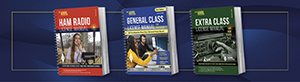
"The content material developed by answering the numerous questions many students in the tech class would ask me as we taught the 'Now you're talking' material. I just filled in the gaps with relevant information to round out the package. And of course being relatively new to ham radio myself, I basically compiled a lot of the knowledge I gained from searching out answers to the vast quantity of questions I had. I would have loved to have this resource when I was new to radio and I'm proud to be able to offer this information in a single resource.
I think that distilling the basics will help a new ham get on the air and will inspire them to further their knowledge by upgrading to general and amateur extra or to find a niche that interests them where they will search out additional knowledge and resources. I personally recommend in the document ARRL membership, the ARRL Operating Manual and the ARRL Handbook.
My hope and desire is to equip radio clubs with a resource to further inspire and keep the interest of new hams and toequip new hams withknowledge that will lead to the practical application of their license privileges. "
Recently in reviewing news clippings, I noted one giving congratulations to brand new hams and then going on to talk about the community services that hams do for their home areas. It sounded like an idea anyone could do, so I wrote Jim and asked about it.
When someone passes their Tech exam, "I like the idea of sending new hams' names and info to the local paper in both a congratulatory way and also as a new asset added to the community."
This one is so obvious and easy that every PIO should be able to try it. Also, talk to your group's VEs.